
Buyers on Grailed decide in two seconds whether a listing is worth reading. They cannot feel the weight of a wool coat or check whether a jacket’s shoulders sit right. They judge all of that from your photos. Get the shot list right and a well-priced grail sells fast. Get it wrong and the same piece sits untouched.
This guide covers Grailed’s photo standards for menswear, the exact shot list buyers expect, and how strong photos paired with complete measurements turn a listing into a sale.
What Grailed’s photo standards actually mean
Grailed does not enforce a rigid photo rulebook the way eBay does for authentication or Poshmark does for its cover photo frame. What Grailed does enforce is buyer trust, and the community’s standards are strict in practice even if informal in policy.
The benchmark is simple: your photos should show the piece the way a well-lit, organized sample sale would show it. Clean background, clear light, nothing competing with the garment.
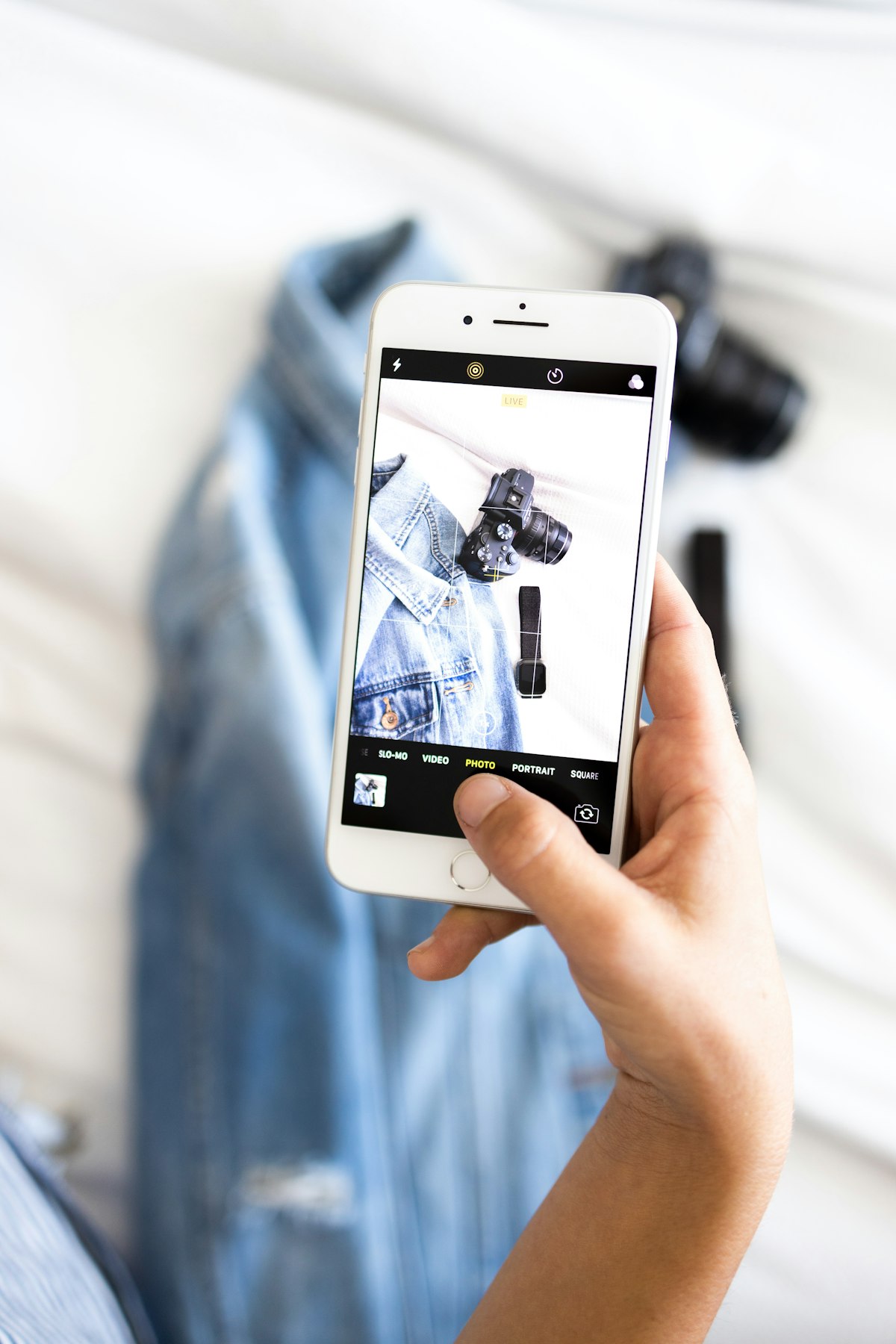
Flat-lay or hanger, not crumpled on the floor. A flat lay on a hard, light-colored surface (white tile, light hardwood, a plain sheet of foam board) is the most trusted format for knitwear, denim, and tailoring. A wooden or wall hanger works well for structured outerwear and shirts where you want to show drape and shoulder shape. Both formats signal that you take the piece seriously.
Neutral backdrop, always. Busy carpets, patterned bedspreads, and cluttered backgrounds pull attention from the garment and signal amateur seller. A white or off-white wall, a plain light floor, or a foam board backdrop costs nothing and immediately elevates your listing.
Natural light beats any ring light. Position the garment near a window with indirect daylight. Direct sun creates harsh shadows; a north-facing window or a slightly overcast day gives even, flattering light that shows color accurately. If you only have artificial light, use two diffused sources from slightly different angles to kill shadows.
The shot list buyers expect on Grailed
Every complete Grailed listing for menswear needs these photos, in roughly this order. Budget 8 to 12 shots total.
Shot 1: Full front flat lay or hanger shot. The whole garment, fully unfolded, centered in frame. This is your cover photo. Use all of Grailed’s image slots rather than stopping at three or four. Buyers read more slots as more confidence.
Shot 2: Full back. Flip it over, same setup. Back seam, yoke, any back graphic or branding. Collectors checking vintage pieces look here immediately.
Shot 3: Interior, at the collar or waist. Show the label. Brand name, size, country of origin, fabric content. This is the single fastest trust signal for authentic menswear. If the tag is worn or absent, photograph the collar seam where it was and say so in the description.
Shot 4: Fabric close-up. Fill the frame with the fabric. This shot communicates weight, texture, weave, and condition in one image. For a heavyweight selvedge denim, a boiled wool coat, or a textured knit, this shot answers the question buyers are actually asking: is this as good in person as it looks?
Shot 5: Any branding, embroidery, or logo. Hardware, patches, embroidered text. Shoot this against the body of the garment so the context is clear.
Shot 6: Flaw documentation. Every flaw your listing mentions in text needs a photo. Pilling on the cuffs, a small stain on the hem, a stress mark on a seam. Photograph flaws in good light from directly above, close enough to show the actual detail. If you have described the condition honestly in text, a buyer cannot dispute what you showed them. If you want to see this handled right, the guide How to Photograph Flaws Without Killing Your Sale breaks down the exact framing.
Shot 7: Flat lay with a tape measure. Lay the tape across the chest at the pit-to-pit point while the garment is flat. This one image pre-empts half of all buyer questions. Pair it with your full measurement block in the description.
Shot 8 (optional): Lay-flat styled with complementary pieces. A relaxed composition showing the jacket over a white tee, or the trousers paired with a sneaker you own, helps buyers visualize wear and signals that you understand the piece culturally. This shot works especially well for Grailed’s archive and streetwear audience.
Detail shots that close the sale
Detail shots are where most Grailed listings fall short. Here is what to close in on beyond the standard shot list.
Hardware and zippers. Brass hardware on a military jacket, a YKK zipper on a Stone Island piece, contrast stitching. Shoot close and in focus. Condition of hardware matters to collectors.
Seams and construction. Chain stitch, flat-felled seams, bar tacking at stress points. These are selling points for vintage and workwear, not just incidental features.
Fades and wear patterns on denim. If you are selling faded denim, the fade is the product. Photograph the honeycombs behind the knee, stacks at the hem, whiskers at the thigh. These photos speak directly to the buyer before a single word of description.
Tape measure at pit-to-pit, length, and shoulder. Three measurement photos means a buyer can verify fit without messaging you. Fewer questions, faster sale.
How photos and listing copy work together
A strong photo set raises interest. The description closes the sale. Grailed buyers who are serious about a piece read the description carefully. They want to know the exact measurements, the condition in honest language, the era or season if you know it, and the reason you are selling it.
Measurements without photos lack proof. Photos without measurements leave buyers guessing their fit. Together, they remove every obstacle between interest and offer.
The Grailed Measurements Guide covers the exact seven numbers buyers check, including the flat-measuring rules that confuse first-time sellers. Once you have those numbers and a solid photo set, the next bottleneck is writing the title and description fast enough to be worth listing at volume.
That is where QuickListAI’s Grailed AI listing generator comes in. The extension reads your item details and generates a search-optimized title, a complete description with the right tone for Grailed’s audience, and all 10 tags, auto-filled into the listing form. You add your measurements and publish.
Photo mistakes to stop making on Grailed
Shooting on a bed. Soft surfaces distort the silhouette. Move to a hard floor or table.
Underexposing to hide condition. Dark photos get ignored. Honest, bright photography builds the seller reputation that generates repeat offers.
Too few photos. Fill every slot. A six-photo listing on a $300 jacket signals low confidence in the piece.
No flaw photos when flaws are disclosed. Buyers need to see it to trust your written assessment.
Cover photo showing only the logo. The cover should be the full front flat lay or hanger shot that establishes silhouette and condition at a glance. For more on cover photo strategy, see The Cover Photo Formula That Gets More Clicks.
Pre-publish photo checklist
Before you hit publish, confirm: full front and back in frame, interior label visible, at least one fabric close-up, every disclosed flaw has a matching photo, and a tape measure shot for the primary measurement. Fill all 10 Grailed tag slots with specific terms covering brand, era, category, colorway, and style.
If you are listing multiple pieces and the writing step is slowing you down, the Grailed AI listings guide shows how sellers use QuickListAI to generate complete Grailed descriptions in seconds, keeping the photo work as the only manual step in the process.
Photos are the first argument. Your listing copy is the close. Get both right and the offer comes.
Write Your Grailed Listing in Seconds with QuickListAI
QuickListAI’s Chrome extension reads your photos and generates Grailed-ready titles, keyword-rich descriptions, and all 10 tags in one click. Add your measurements and you have a complete listing in under a minute. 2 free listings, no credit card required.
Add to Chrome, FreeFrequently asked questions
No. A recent smartphone on its standard rear camera is enough. Enable gridlines, shoot in the highest resolution your phone offers, and let natural window light do the heavy lifting.
Flat lays work best for knitwear, denim, and construction-detail pieces. Hanger shots work best for structured outerwear and shirts where drape and shoulder shape matter. Use whichever shows the silhouette most clearly.
Fill all available slots. A strong listing needs at minimum: full front, full back, interior label, fabric close-up, flaw shots, and at least one measurement photo.
No mandate, but light neutrals (white, cream, light gray, bare wood) consistently outperform busy or dark backgrounds because they keep focus on the garment.
Use overcast natural light or indirect window light. Shoot slightly above at a 45-degree angle. A white foam board on the opposite side from your light source acts as a reflector and opens shadows in dark fabrics.
No. Photos attract the click. A complete description with measurements, condition details, and era information is what turns that click into an offer.